Insights & Updates
Latest from Tattle
Discover trends, tips, and insights to elevate your restaurant operations.
Discover trends, tips, and insights to elevate your restaurant operations.
 The Tattle Team
Restaurant marketing has always been about driving traffic. Fill seats, move units, grow the top line. But a quiet shift is underway inside some of the sharpest marketing teams in the industry, and it starts with a question most marketers have not traditionally asked: what happens to the guest after they arrive?
For too many restaurant operations, the honest answer is: we don't really know. And the cost of that blind spot is finally becoming impossible to ignore
Here's the math that should give every restaurant marketer pause.
Roughly 70% of first-time restaurant guests never return. The industry averages a guest retention rate of around 55%, well below the cross-industry benchmark of 75%. And depending on your segment, the cost to acquire a single new guest ranges from $27 for fast food all the way to over $120 for casual dining.
In 2025, restaurants lost 1.4 active guests for every new customer acquired, reinforcing how difficult it has become to rely on acquisition alone for sustained growth.
So if you're running campaigns that successfully drive traffic to locations or menu items that consistently underdeliver on the guest experience, you aren't just losing those guests. You're spending real marketing dollars to lose them. And some of them will tell others about it.
This is the leaky bucket problem. You can keep pouring budget in from the top, but if the experience has holes in it, the math never works in your favor. A 5% increase in customer retention correlates with a 25% increase in profit (Industry Drive), which means the return on fixing experience gaps is significant, and measurable.
Historically, guest satisfaction data has lived in the world of operations and customer service. A guest had a bad experience, a manager got an alert, the issue got triaged. That's a reactive model, and while it has its place, it leaves an enormous amount of strategic signal on the table.
The problem isn't that restaurants lack feedback. Ratings, reviews, and survey responses reveal how guests perceive food, service, and atmosphere, but most of that data never makes it into the hands of a marketing team in a form they can act on. It stays siloed in ops dashboards, processed as a complaint log rather than a strategic input.
That's the gap Tattle is designed to close.
When guest satisfaction data is structured at the item and attribute level, covering dimensions like taste, texture, portion size, temperature, presentation, and value, it stops being noise and starts being signal. Here's what it can tell a marketing team that traditional analytics can't.
Which LTOs are resonating with guests versus just moving units.
There's a meaningful difference between a limited-time offer that drives trial and one that actually delights guests and earns a return visit. Item-level feedback data surfaces that distinction clearly, so marketing and culinary teams can make informed decisions before the next LTO window opens. Promoting a limited-time offer that scores low on perceived value or taste, no matter how well it moves in the short term, is a fast path to weakening brand trust.
Which locations are ready to be featured in a campaign versus which ones aren't.
Amplifying a location with satisfaction issues through paid media, influencer content, or a brand campaign is one of the most expensive mistakes a restaurant marketer can make. Guest satisfaction scores at the location level give marketing teams a data-informed read on where campaign dollars will generate lasting return, and where they will accelerate churn instead.
Which dayparts and ordering channels are dragging satisfaction scores down.
A guest who orders delivery during the dinner rush may have a completely different satisfaction outcome than one who dines in during lunch service. Delivery and online order data shows which menu items perform best across platforms and how off-premise sales compare to dine-in trends, but without attribute-level satisfaction data layered on top, operators are flying blind on where the experience actually breaks down. Knowing which channels are underperforming, and why, lets marketing teams align their messaging, offers, and targeting accordingly.
Where marketing spend will generate return versus evaporate.
Guest satisfaction data, when it's granular and connected to operational context, becomes a map of where retention is strong and where investment will disappear. That's the kind of intelligence that changes how a marketing budget gets allocated across a multi-unit portfolio.
The shift in thinking is simple but consequential: guest feedback is not a support tool. It is a strategic asset.
Guests who received direct, personalized marketing had significantly higher retention rates than those who did not. But personalization at that level requires knowing something meaningful about the guest experience; not just who visited, but whether they were satisfied, what fell short, and what brought them back.
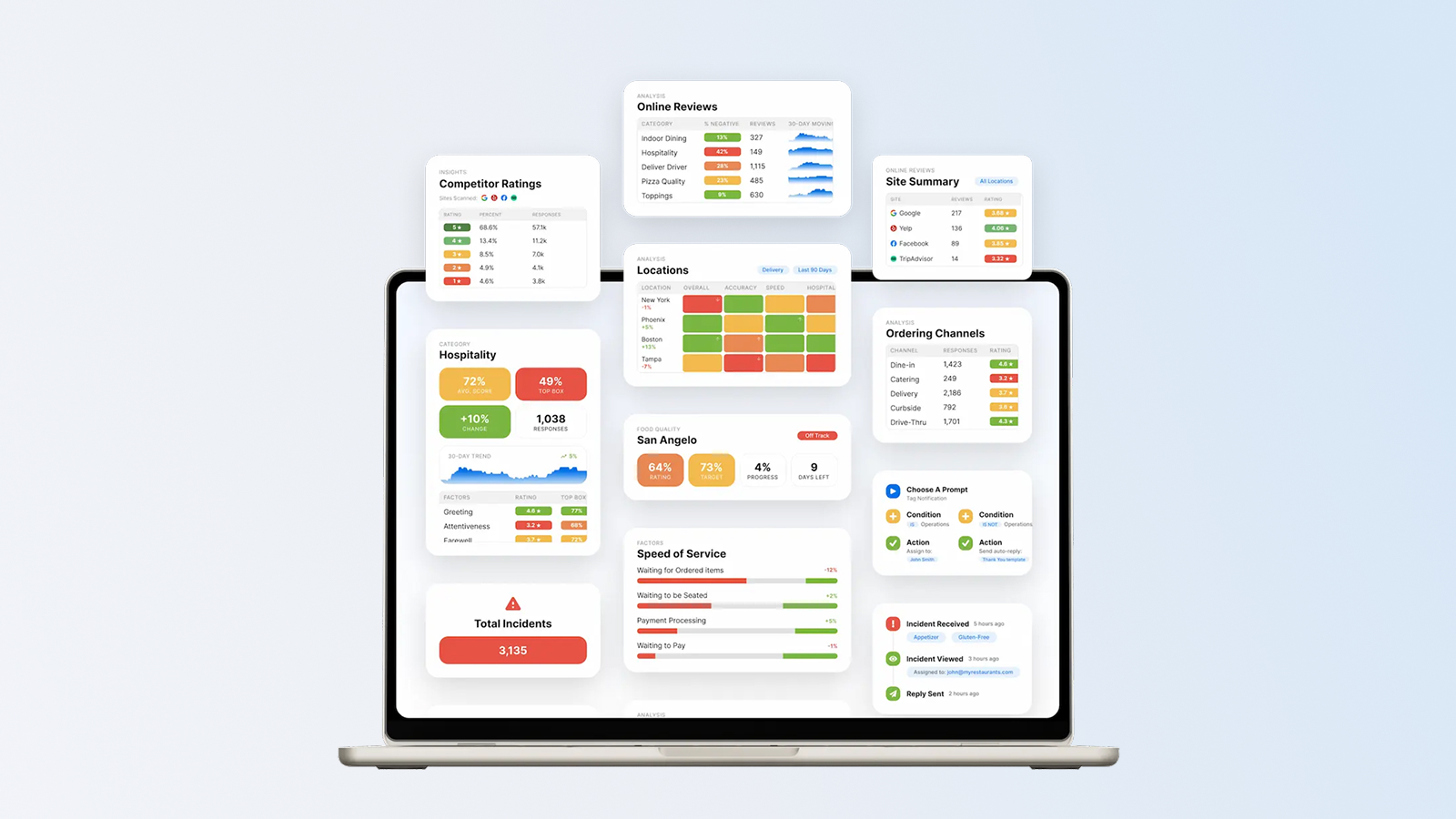
Tattle captures attribute-level guest feedback across every ordering channel, giving marketing and operations teams a shared, structured view of satisfaction data they can both act on. That shared visibility is what makes it possible to run campaigns with confidence, promote LTOs backed by real performance data, and avoid pouring spend into locations that aren't ready to convert trial into loyalty.
Guests don't disappear. They disengage. The brands that understand why, at the item and attribute level, are the ones that can bring them back.
The restaurant operators and marketers who are connecting guest satisfaction data to their marketing strategy aren't just solving a retention problem. They're building a feedback loop that makes every future campaign smarter and every marketing dollar work harder.
They know which menu items are worth promoting because guests say they're worth returning for. They know which locations can absorb the traffic a campaign generates. They know where the experience is strong enough that a great first visit becomes a habit.
Brands using direct, data-driven engagement strategies are retaining guests at significantly higher rates than those relying on broader, non-targeted marketing approaches. The gap between data-informed restaurant marketers and those still operating without structured feedback will only widen from here.
If your marketing team isn't pulling guest satisfaction data into your planning process, the question worth asking is simple: what changes when you do?
Tattle is the restaurant CXI platform built to make guest satisfaction data actionable for both operations and marketing teams. Learn how Tattle helps multi-unit restaurant brands turn item-level feedback into smarter campaigns, stronger LTO decisions, and measurable retention lift.
What is guest satisfaction data in restaurants? Guest satisfaction data refers to structured feedback collected from diners about their experience, covering dimensions like food quality, service, speed, and value. When captured at the item and attribute level, this data gives restaurant operators and marketing teams specific, actionable insights beyond a simple star rating.
Why should restaurant marketers care about guest satisfaction scores? Because satisfaction scores directly predict retention, and retention is the foundation of marketing ROI. Driving traffic to locations or menu items that underdeliver on the experience means spending budget to acquire guests who will not return. Guest satisfaction data helps marketers identify where campaigns will generate lasting return versus churn.
What is the restaurant industry guest retention rate? The restaurant industry averages a guest retention rate of around 55%, well below the cross-industry average of 75%. Approximately 70% of first-time restaurant guests do not return for a second visit.
How much does it cost to acquire a new restaurant guest? Customer acquisition costs vary significantly by segment. Fast food averages around $27 per new guest, fast casual ranges closer to $83, and casual dining can exceed $120 per acquisition. These figures make retention a high-priority lever for improving overall marketing efficiency.
What is the leaky bucket problem in restaurant marketing? The leaky bucket problem refers to the pattern of continuously spending marketing budget to acquire new guests while failing to retain them due to experience gaps. If the guest experience consistently underdelivers, no volume of new traffic will produce sustainable growth because guests exit the relationship before they become loyal.
How does Tattle use guest feedback data for restaurant marketing? Tattle captures attribute-level guest satisfaction data across ordering channels, covering dimensions like taste, texture, portion size, temperature, presentation, and value. This structured data gives restaurant marketing teams a clear view of which LTOs are resonating, which locations are campaign-ready, and which channels are dragging satisfaction scores, enabling more precise and higher-return marketing decisions.