Insights & Updates
Latest from Tattle
Discover trends, tips, and insights to elevate your restaurant operations.
Discover trends, tips, and insights to elevate your restaurant operations.
 Tattle Team
Most restaurant brands only have detailed behavioral data on a tiny slice of their customers: the ones who order digitally, join loyalty programs, and actively engage with surveys.
According to the National Restaurant Association’s 2024 Technology Report, only 38% of restaurant customers actively participate in loyalty programs, and even fewer provide regular feedback.
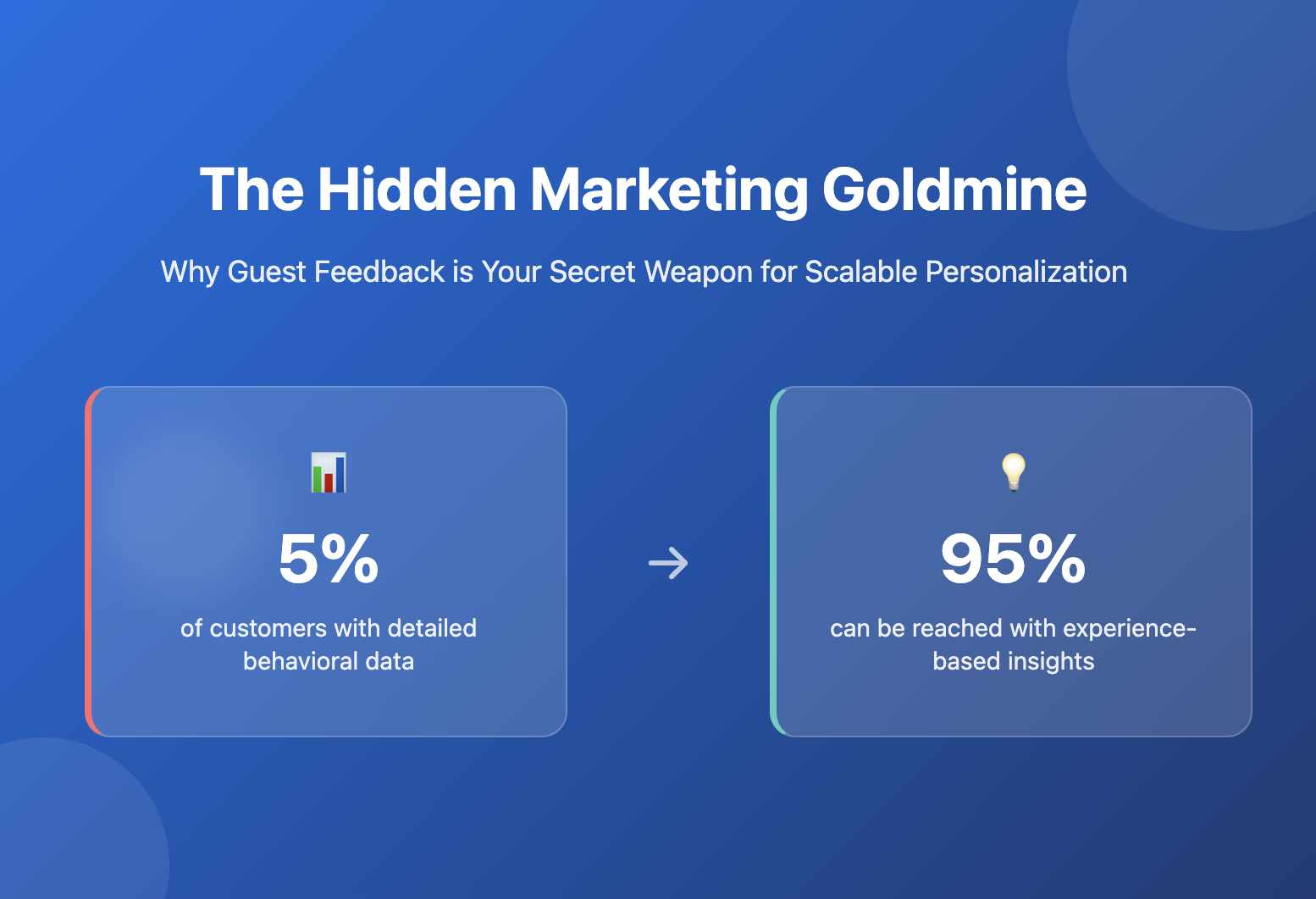
So when brands build “hyper-personalized” campaigns using transaction data alone, they’re customizing for 5% of their audience and guessing for the other 95%. That’s not personalization—that’s educated guesswork at scale.
Your transaction data tells you what got rung up. Your guest feedback data tells you how that experience made people feel. This distinction is crucial for effective marketing.
Consider this scenario: Your data shows chicken sandwich sales spike on Thursdays. Great insight, right? But what if guest feedback reveals that Thursday chicken is consistently “dry” or “overcooked”? Suddenly, your Thursday chicken promotion becomes a recipe for disappointment rather than revenue.
With experience data, you can transform that same campaign: “New prep standards. Juicier chicken. Come taste the difference this Thursday.” Same sale-driving offer—twice the relevance.
The future isn’t about collecting more individual data points. It’s about leveraging experience trends to create scalable insights that feel personal.
Here’s how it works: When guest feedback platforms like Tattle detect that customers consistently report long wait times for smoothies during the 11am-1pm rush, you now have experience data that likely reflects the reality for all customers ordering during that window—not just the few who gave feedback.
This enables what we call “trend-based personalization.” You can confidently message all customers who order during peak hours: “We’ve been hearing your feedback—and we’re working on speeding up mid-day smoothie orders. Enjoy 15% off your next visit!”
Suddenly, a one-to-many campaign feels one-to-one because it’s rooted in truth about their likely experience.
Here’s where feedback data becomes especially powerful for multi-unit brands. Imagine your veggie burrito gets rave reviews at suburban locations but mixed feedback downtown—specifically about soggy texture from overstuffing.
With this insight, you can create targeted campaigns:
Suburbs: “Fan-favorite veggie burrito, back this week only!” Downtown: “We heard you. Leaner. Crispier. A better veggie burrito experience.”
You’re not just listening—you’re showing customers their experience shaped your decisions, even if they never told you directly.
Traditional loyalty platforms excel at tracking behavior: purchases, visits, rewards redeemed. But they struggle with the “why” behind customer actions.
Research from Harvard Business Review shows that understanding customer motivation is 3x more predictive of future behavior than transaction history alone.
Guest feedback closes this loop. When feedback data shows that guests who tried your new fries but then churned often mention “too salty” or “tasted stale,” you now have the “why” behind the behavior. This enables targeted win-back campaigns: “Come back and try the new and improved fries—crispy, golden, perfectly salted.”
Smart restaurant brands are beginning to recognize that guest feedback isn’t just a customer experience tool—it’s their most scalable source of personalization. While traditional CX platforms focus on operational improvements, forward-thinking marketers are mining this data for campaign insights.
The brands winning in 2025 won’t be the ones with the most individual customer data. They’ll be the ones who best understand the experience patterns that drive customer behavior—and can act on those insights at scale.
The shift from transaction-based to experience-based personalization doesn’t require a complete overhaul of your marketing stack. Start by:
The data is already there. The question is: Are you ready to use it?