Insights & Updates
Latest from Tattle
Discover trends, tips, and insights to elevate your restaurant operations.
Discover trends, tips, and insights to elevate your restaurant operations.

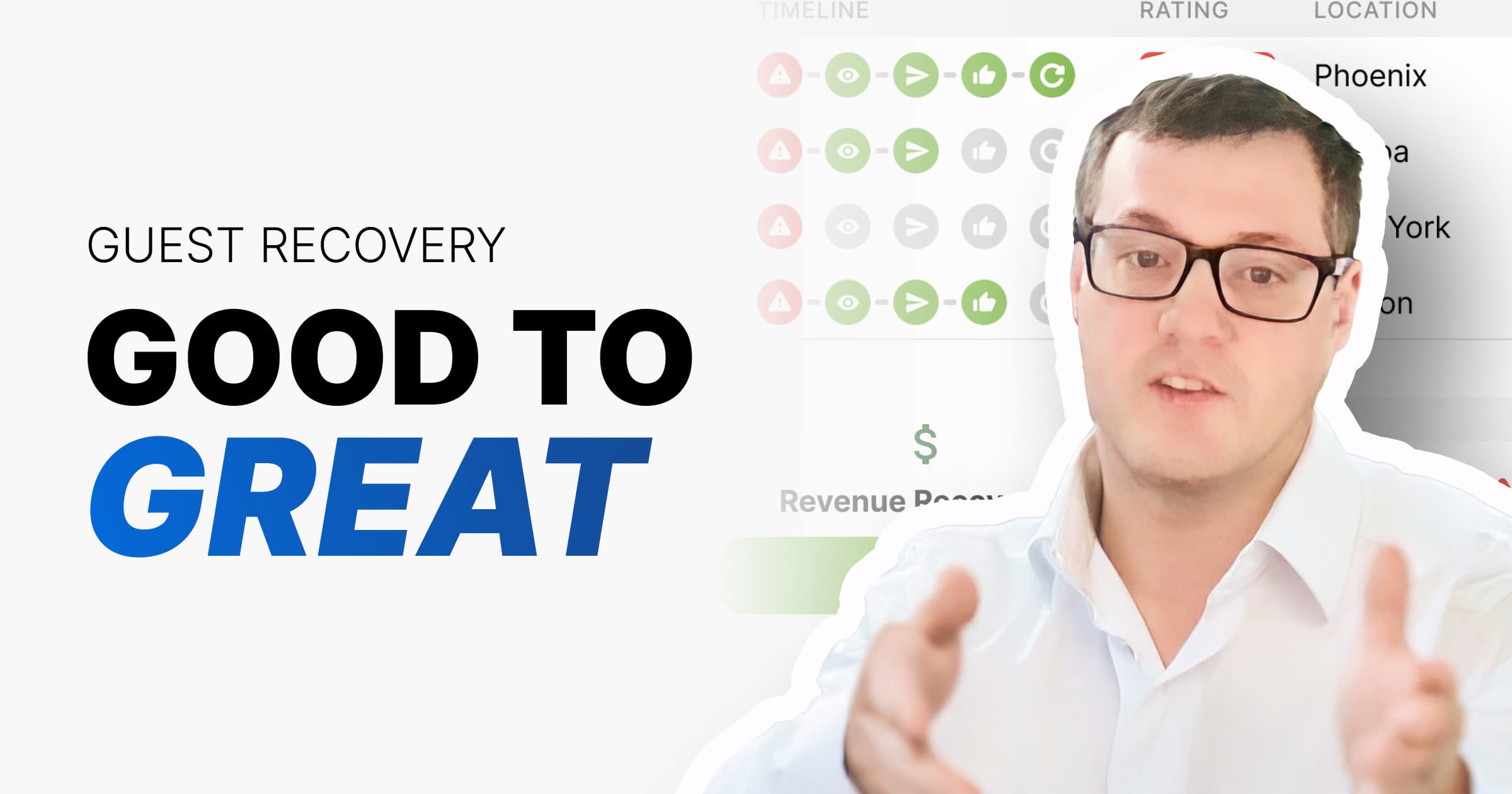
Exceptional guest recovery can be the difference between a loyal customer and a lost one.
It can be the difference between millions of additional revenue (as seen with MOD Pizza's recovery success) and a sales drop – between a trustworthy brand and an unreliable one.
The truth is, you’ve already done the hard part: delicious food, unique brand experience, friendly staff…so don’t let one small mistake nullify them all.
The key metric to measure the success of your guest recovery program is recovery rate. Here’s how it can be calculated:
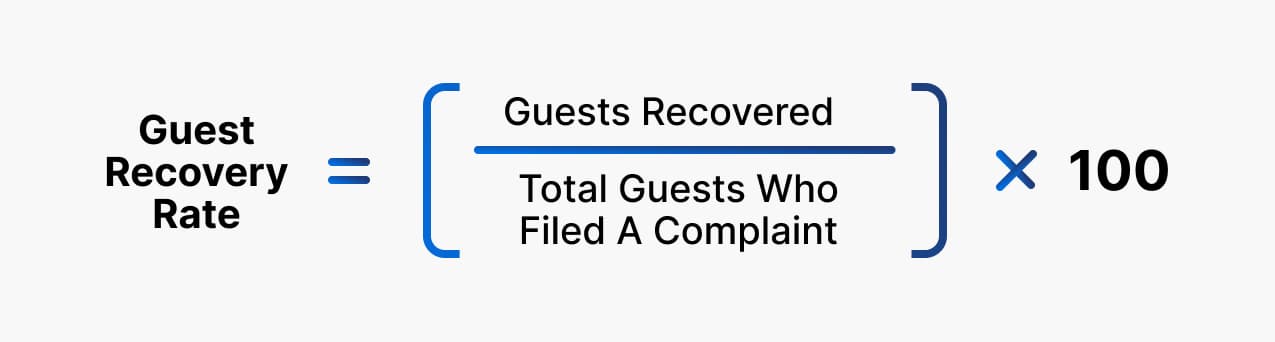
At Tattle, a guest who filed a complaint is defined as someone who submitted a survey giving a 3-star or less experience. And a recovered guest is defined as someone who submitted another guest survey (indicating that they’ve had another experience with the restaurant), or someone who placed another order (detected via our integrations with a brand’s ordering / loyalty tech stack).
Here’s how we break down recovery rate as a metric:
Recovery rate: the combined outcome of time to reply, rate of reply and satisfaction to reply.
Needless to say, the higher each of the three component metrics, the higher your recovery rate is.
Now, let’s break down the takeaways using some real-world examples of Tattle partners.
This one may seem like a no brainer, but let me illustrate to you just how important it can be.
Below is some actual data from one of Tattle’s pizza brand partners with hundreds of locations. Currently they’re at just 24% response rate to guest feedback collected via Tattle. Granted, the current average response time (12 days and 12 hours) is far from ideal, but let’s hold that constant for now.
If they can improve their response rate from 24% to 90% — which is very achievable via Tattle’s automated guest recovery system and is very common among Tattle partners – the average monthly recovered sales per store would quadruple.

Bonus point: by then the recovered sales would have already paid for the Tattle program itself 2.4 times over.
It’s a very easy lift for the staff as well. Not only can they respond to both solicited survey feedback and public reviews (e.g. Google, Yelp, Facebook etc.), but also they can apply AI responses or preset templates depending on how satisfied a guest is with their experience.
That means on average it takes only seconds to follow up on a guest feedback — time well spent for the incredible revenue potential if you ask me!
One Tattle partner used to always sort feedback submissions by time and respond to older feedback first. We suggested that they instead respond to the newest feedback first, in order to keep that response time within 45 minutes to an hour for as many guests as possible.
Their satisfaction to reply rate soared from 24% to 64%.
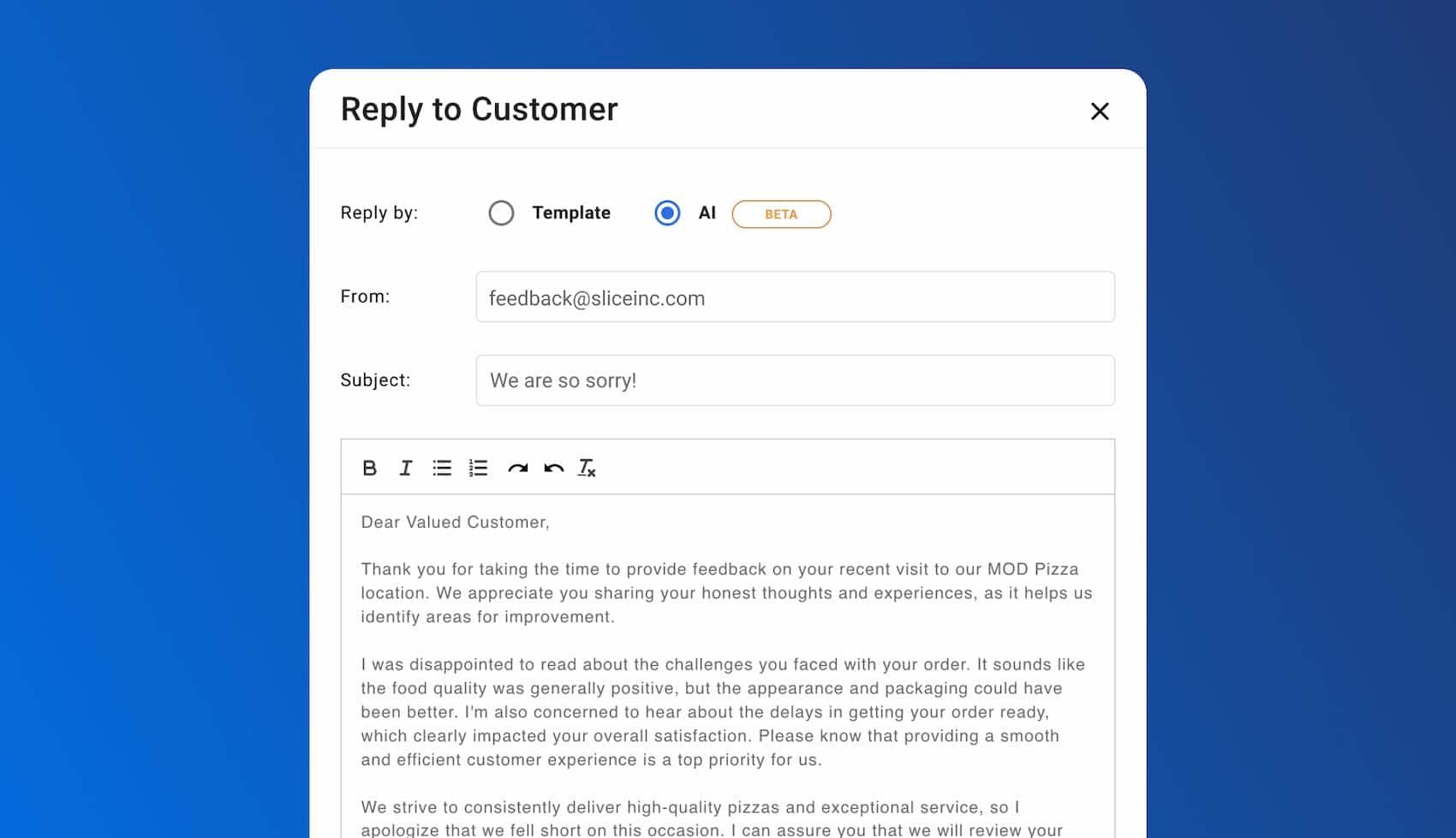
Of course — and this one is a given — you should keep the responses as personalized as possible. As a best practice, we help all Tattle partners to keep their response as specific to the main cause of dissatisfaction as possible, and that’s why Tattle’s AI response comes in so handy.
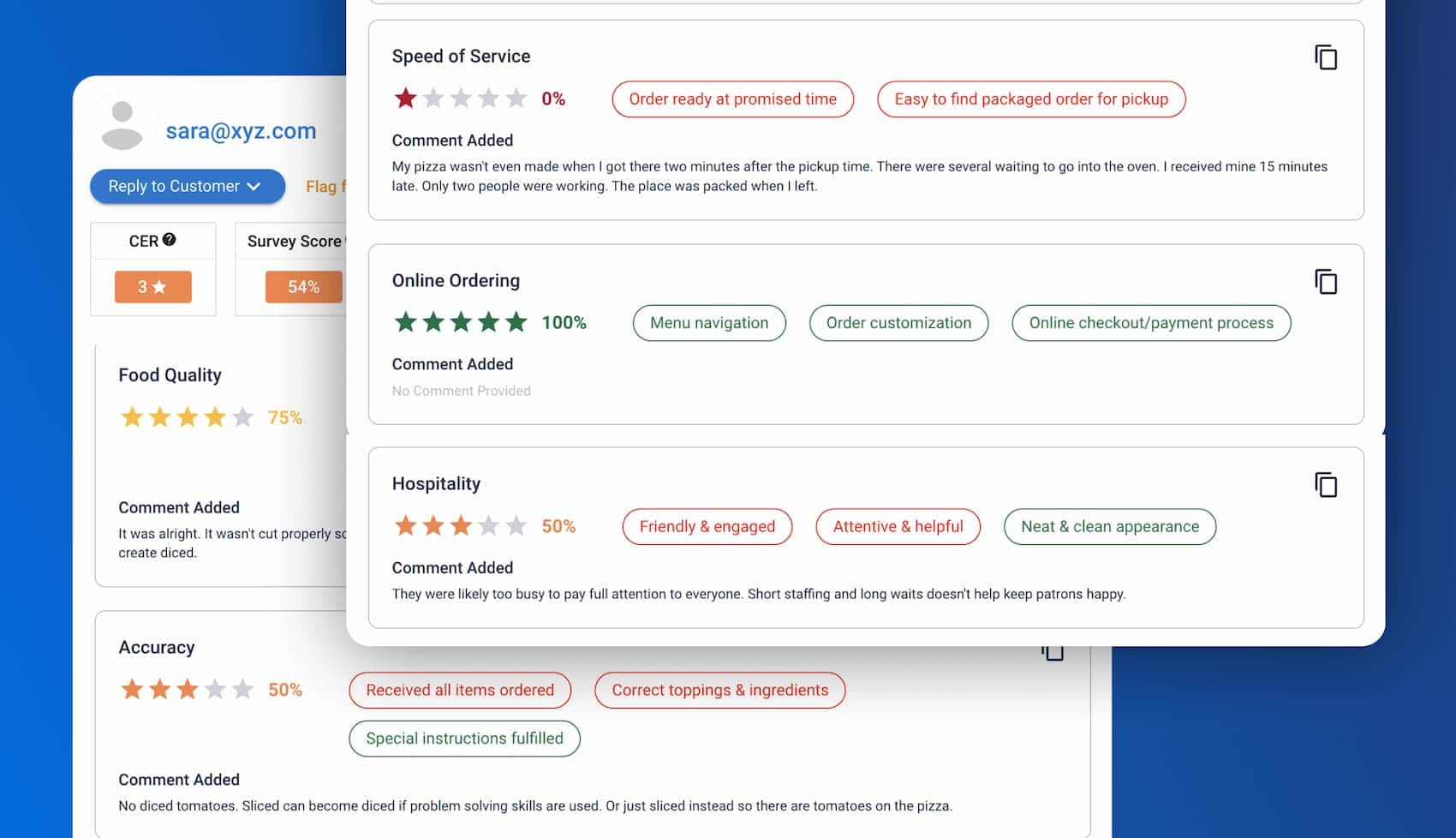
Snapshot of an example negative survey submission:
Tattle AI response to this guest:
In addition, always sign off with your team member’s name and not something generic like “”The Hot Pizza Team”. This kind of humanization can have an outsized impact on how satisfied guest are with your reply.
Using a combination of automated replies using templates, and one-click AI response, your brand will have all the tools needed to get that reply rate down to within an hour!
Attaching the right appeasement to your replies (if you wish to do so) is an art and science.
If you offer a free product, it’s low cost to the restaurant since you probably have extra sides and cookies anyway, but you’re limiting the guest to that one product. If you offer a dollar amount that only kicks in at a spend threshold higher than the average ticket price (e.g. $5 off $25 when a typical ticket is $15), you’re pricing the guest out.
In both of the instances above, the guest is likely to perceive the appeasement as low value and won’t be really tempted to redeem it.
There are two keys that make an appeasement effective: perceived value and ease of redemption.
As a rule of thumb, your appeasement should be of equal value to the incident and slightly more. For example, if a guest had some problems with their pizza, you should offer to replace the pizza and add in a free dessert.
Your appeasement should always be easily redeemed. Some common but unpleasant hurdles that guests have to jump through to redeem a reward can be:
All these barriers to redemption will only turn away the guest even more.
Appeasements offered inside Tattle typically come as a short coupon code entered during checkout, or a QR code that can be scanned at the POS for dine-in guests. And they almost always work magic for winning back customers.
Just remember, when it comes to appeasement, don’t just make it right — make it easy too.
If you take away anything from this blog, just remember the following
About the Author
Intelligence & Analytics Expert
Alex formerly led Customer Excellence programs at Blaze Pizza and Dunkin'. Now, he oversees LTO testing, operational analysis, and ROI optimization for Tattle partners.