Insights & Updates
Latest from Tattle
Discover trends, tips, and insights to elevate your restaurant operations.
Discover trends, tips, and insights to elevate your restaurant operations.
 Tattle Team
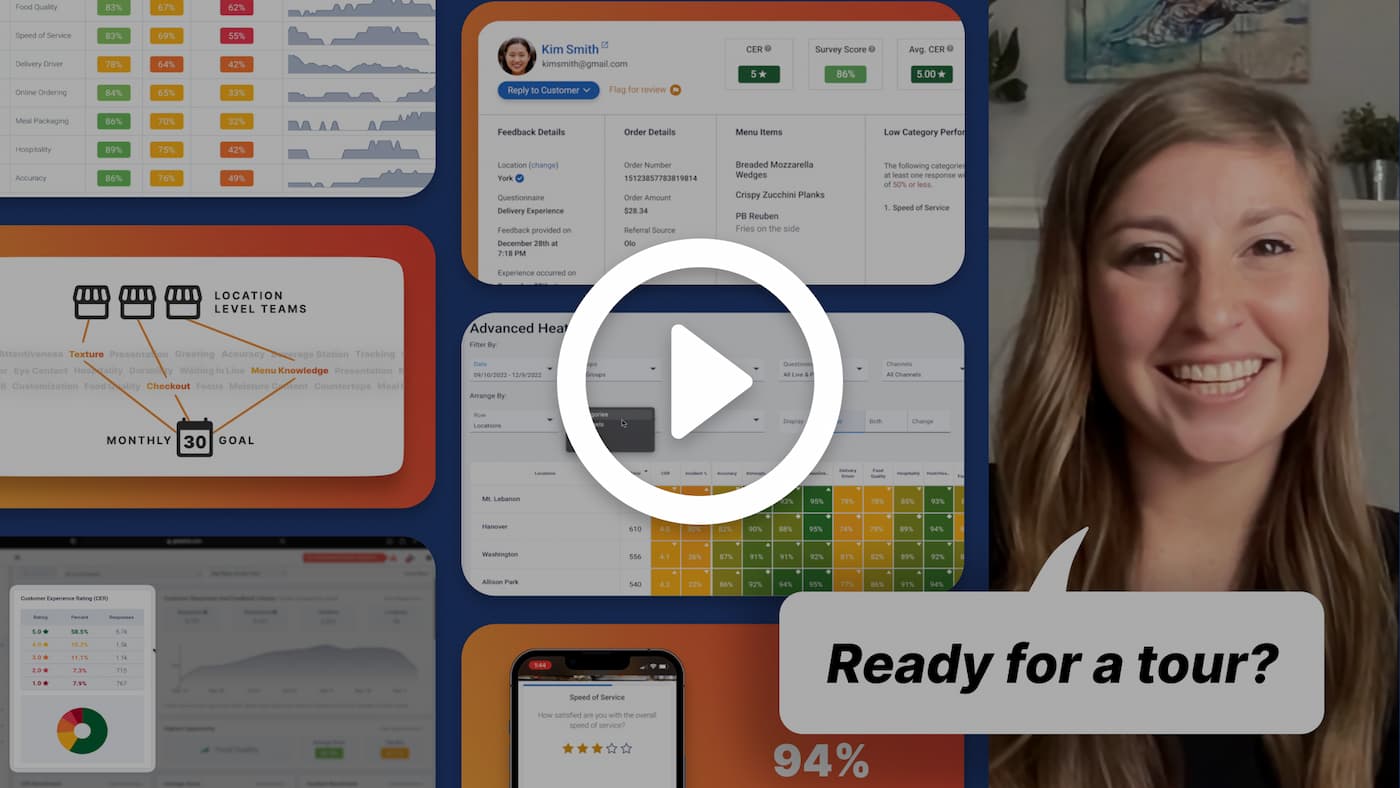
Editor’s Note: This article is a recap from a panel discussion — you can watch the full recording by clicking on the thumbnail below.
Featuring top executives from four leading pizza brands, this exclusive “Tat-Talk” panel slices through the toughest questions facing restaurant operators and marketers today, around how to identify, investigate and close operational gaps using guest feedback.

Jeff: Accuracy. Be it ingredients, the way the pizzas are baked, any special instructions, the packaging, the number of items in each order…the level of detail given by Tattle allows us to break down accuracy into all these different components and understand exactly where our opportunities are.
Adam: What we identified at our Pie Five, the fast casual concept, is that the hand-off of pizzas after packaging was especially problematic. It used to be a “pizza auction” process where guests had to wait for their names to be called and it was just a messy process. Through Tattle, comments around this process were brought to attention and now we have an organized pickup shelf for the hand-off.
JK: Consistency is key for our restaurants. Especially when there’s human involvement such as hospitality, how do we ensure consistency across our locations and time of day. Tattle allows us to monitor that at each location, and help us understand when our customers’ perception is different from our perception.
JK: We had a recent tech stack change, and we’re closely monitoring feedback on social media, Tattle and website contact forms to understand how guests are adjusting to the change. In a separate example, Tattle feedback pointed our attention to one location where multiple survey submissions mention “burned pizza”. In the end we realized that it was an easily overlooked oven setting that led to pizzas being burned, and was able to prevent such future incidents.
Jeff: Over the last 6 months, we used Tattle’s VOC data to design validation tools for multi-unit and store managers. Through weekly reviews or both Tattle feedback and social media, we now organize structured visits at stores and identify training gaps, or necessary process changes, to stem any potential issues.
Adam: Generic social is emotional, whereas feedback from Tattle is more specific based on certain menu item or behavior at a store. For example, we noticed thanks to Tattle that some of our stores were charging guests for sides, while others weren’t. We visited those stores and saw signs at the counter charging people for sides. We never planned for these operational differences but now we know to standardize this and ensure consistent guest experience across the board.

Jeff: Not only different levels of teams within Lou Malnati’s use Tattle, but also departments across different functions. Our menu committee use Tattle data to fine-tune their menu developments, and our marketing team use it to get a pulse of consumer preferences.
Adam: We use OSAT ranking ever week to establish transparency within the organization, and reward best-performing locations’ GMs. Some franchise owners even use Tattle scores as incentives for their GMs. And our franchise business consultants use those to identify stores that need more coaching.
Jeff: I use the filters in Tattle heavily. For example, we can filter by ordering channel and see that dine-in has higher food quality than off-premise; we can filter between full-service and carry-out. Specifically for curbside, we ask specific questions about curbside and its execution. So this really allows me to slice and dice the data in many different ways.
JK: I love filtering by groups and regions. For example, some locations of ours are more far apart and others are in clusters. We use these filters to understand if there are unique flavor preferences based on geographies and demographics.

Jeff: We use the menu item level insights in Tattle very frequently to understand what people think of each item and what they’d like to see on our menu. It’s also tremendously helpful for our LTO and menu development, and for understanding how new items or LTOs perform in terms of guest satisfaction and incident rate, not just sales. We also rely on these data to make decisions on whether to allow for additional toppings on LTOs, or what kind of marketing campaigns to run.
Adam: We revamped our menu and added 6 signature pizzas. With Tattle surveys, we were able to ask ingredient-level questions, and see whether we were meeting people’s expectations, and whether the spice level was ok or not. For example, there was one pizza with too many spicy ingredients, and as a result guests guests would rather order toppings separately than having them all in one pizza. That led to us change the recipe and the menu development process. And I was able to summarize all the findings easily for the executive team using the charts and visualizations in Tattle.
Adam: On the Pizza Inn side, as we are a buffet concept, we were concerned about getting enough dine-in / buffet feedback. By using Tattle QR codes on napkin or menu insert, we were able to receive tons of survey data as people are more than happy to give feedback at the table. So it’s very easy to make Tattle surveys accessible in store.
JK: I was also concerned about adoption among our guests, whether we can receive a high quantity of reviews. Tattle’s integrations into our existing tech stack, as well as automatic surveys post an experience gave us high-velocity, high-quantity feedback data in no time. Very quickly we collected enough data to make key decisions on.
Jeff: I was very careful to not make knee-jerk reactions to one-off feedback or comments, and make sure that we’re intellectually honest to ourselves. We make it a point to not act based on limited feedback, and have statistically significant trend data before making a judgement call.
Jeff: I don’t think people always believe they’re gonna be heard. But Tattle feedback is very actionable, so that when people give feedback, they can see it show up at the restaurant level and they want to offer more feedback as a result. People want to give feedback and want to be heard.
JK: From a franchisee standpoint, when they receive positive reviews, it’s a huge source of motivation. And when feedback is less ideal, it’s very specific and actionable so it’s always framed as an opportunity rather than criticism.
Adam: The previous feedback platform we used didn’t have customizable survey based on the order method, so we couldn’t tailor the survey to the ordering channel. For example, friendliness might be more important to dine-in customers than delivery customers. With Tattle surveys, we can ask different questions based on the order method.
Want more?