Insights & Updates
Latest from Tattle
Discover trends, tips, and insights to elevate your restaurant operations.
Discover trends, tips, and insights to elevate your restaurant operations.

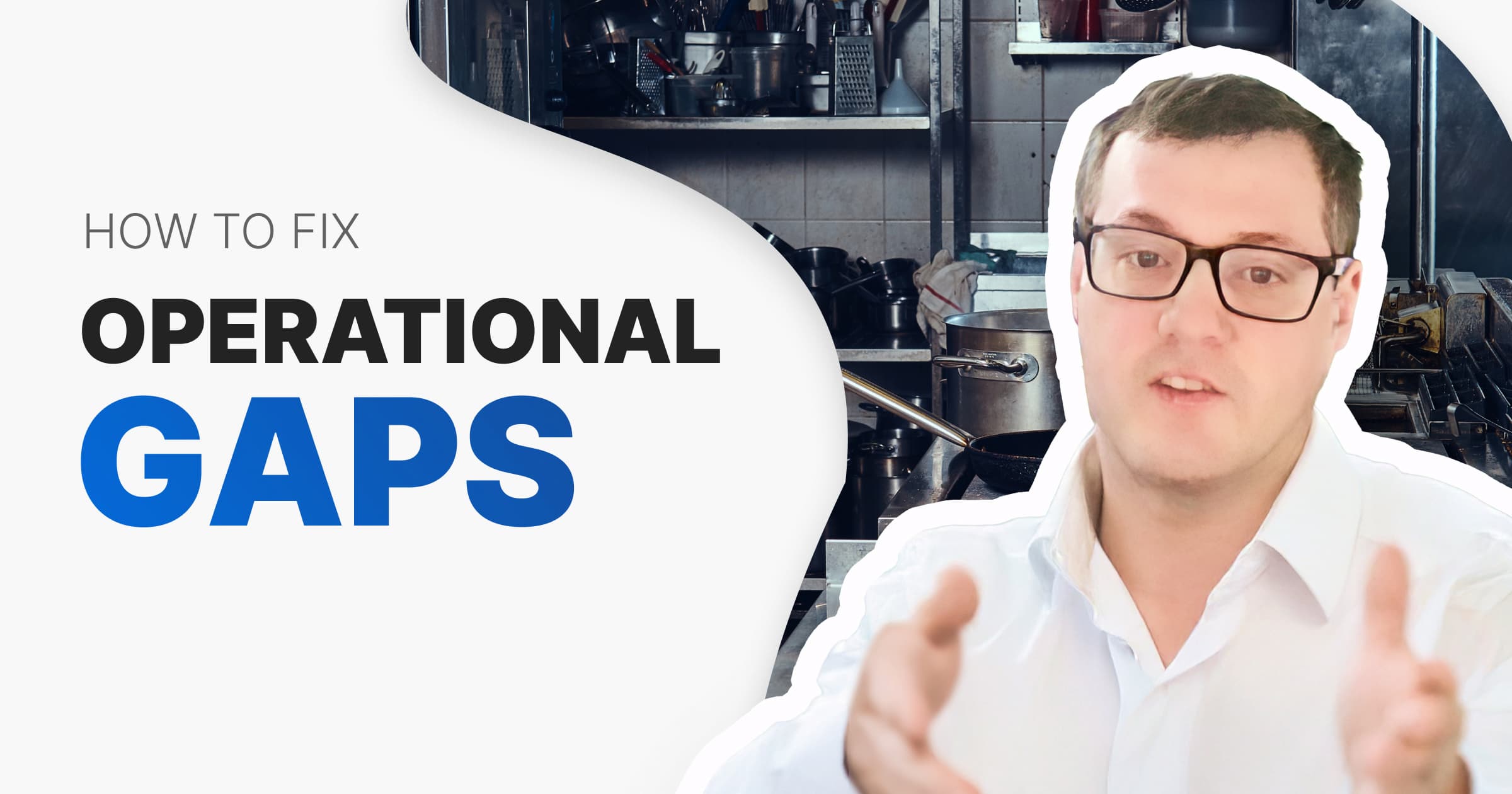
Every ordering channel looks a bit different when it comes to guest satisfaction. It's natural in the restaurant space, but far from a valid excuse to forgo optimization and create the best experience possible.
In Tattle’s annual restaurant report, delivery was identified (consistent with our prior years’ findings) as having the lowest overall satisfaction ratings, while dine-in tends to see the highest.
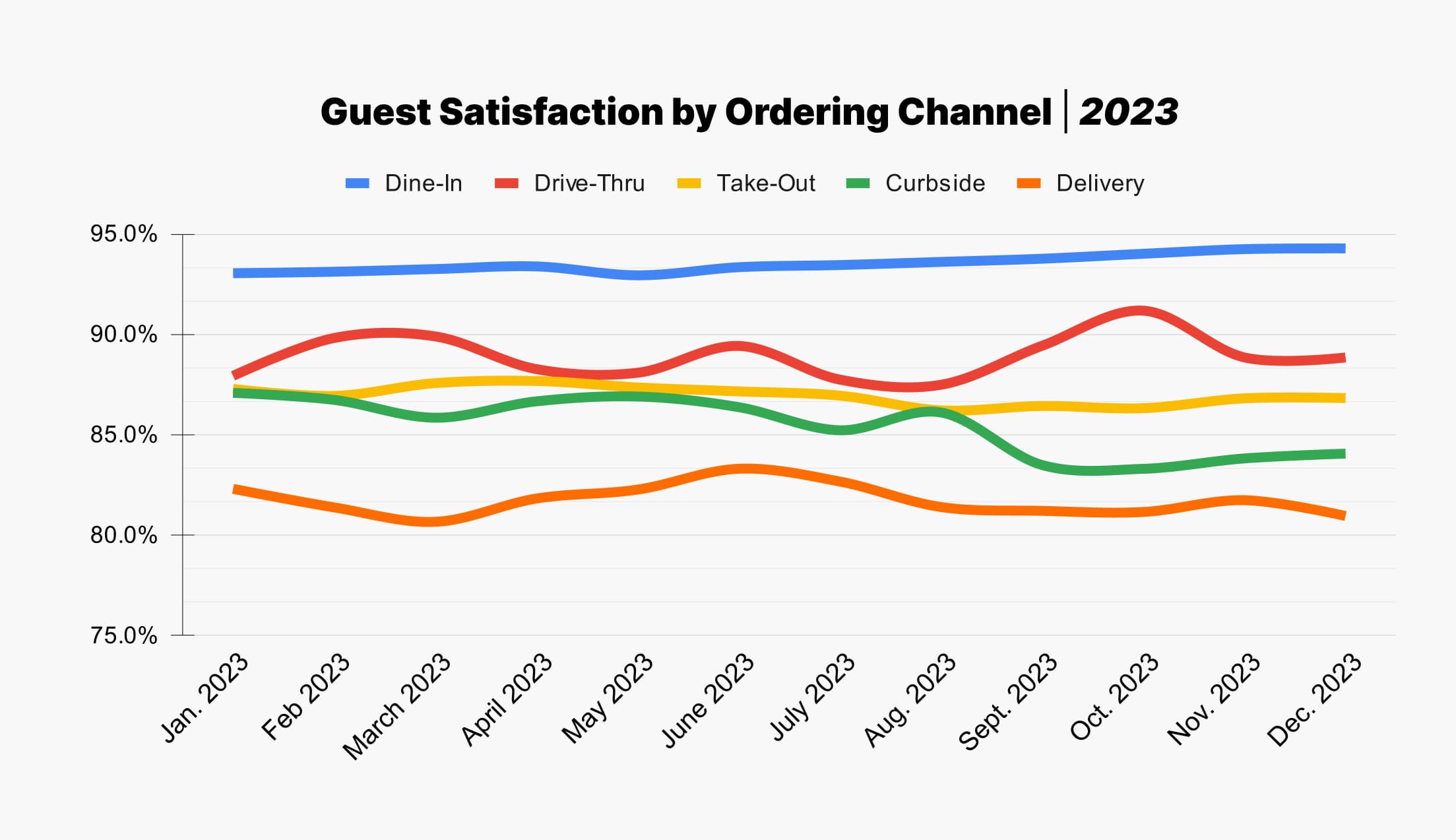
There are many intuitive reasons for this. Given the laundry-list of logistical challenges and uncontrollable factors (e.g. driver, traffic, weather etc.), delivery orders tend to see lower sentiment scores around food quality, speed of service, value, and accuracy.
On the other end of the spectrum, dine-in guests enjoy in-person service and have the opportunity to rectify order issues on the spot (e.g. accuracy, food quality etc.). Thus, this channel generally results in higher guest satisfaction ratings.
In this article, we’ll talk about how to identify such operational gaps between different guest journeys and bridge them – so that you can enjoy higher satisfaction regardless of the channel and maintain consistent brand standards in the eyes of your customers.
Operational gaps can vary from restaurant to restaurant, as well as between different guest journeys.
At Tattle, we break down each guest experience into its component operational categories: food quality, accuracy, speed of service, hospitality, cleanliness, etc.
Thus, operational gaps are the difference in satisfaction in the same operational category across different guest journeys.
In order to uncover operational gaps, you have to do two things:
Once you have all the data points, you could visualize the findings in a handy bullseye chart. Here’s a quick summary of that chart.
Basically, you want to focus on the dots that are the farthest away from the center point, which represents 100% guest satisfaction. So if you look at the red dots in the outer rings, you’ll see that “delivery—accuracy” and “delivery—food quality” are your biggest gaps, compared to the same operational category.
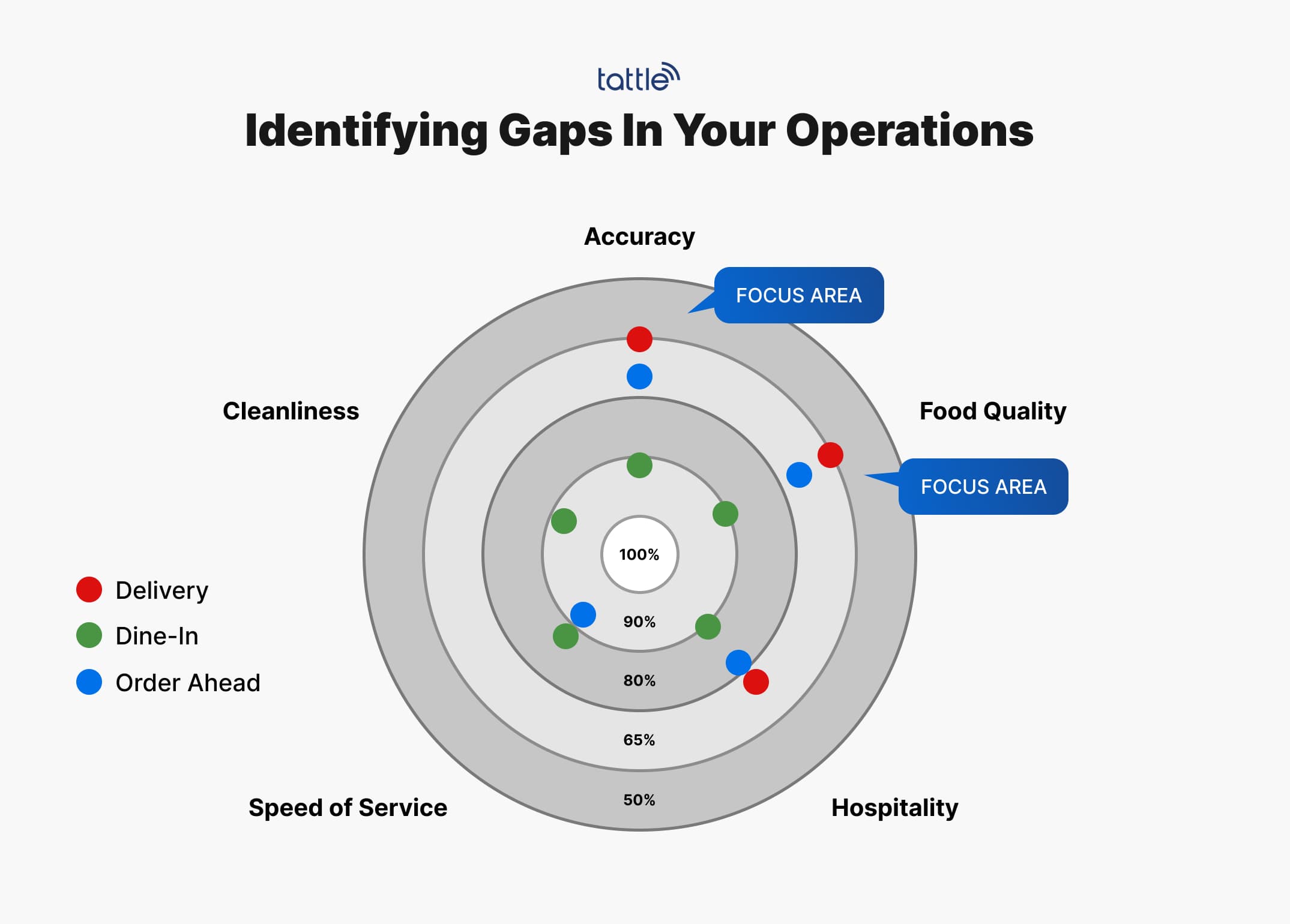
For the purpose of this article, let’s say that you want to focus on “order accuracy”. It’s one of the most common, most pronounced operational gaps as the orders move from on-premise to off-premise channels.
So, how do you go about closing the order accuracy gap?
Once you pinpoint the operational category as your gap (in this example, order accuracy), you can dive deeper to see what guests are saying about order accuracy across different guest journeys.
This is when you need to break down each operational category into its underlying factors in your surveys. Below is an example of how three brands using Tattle surveys ask guests to rate each factor within “accuracy.”
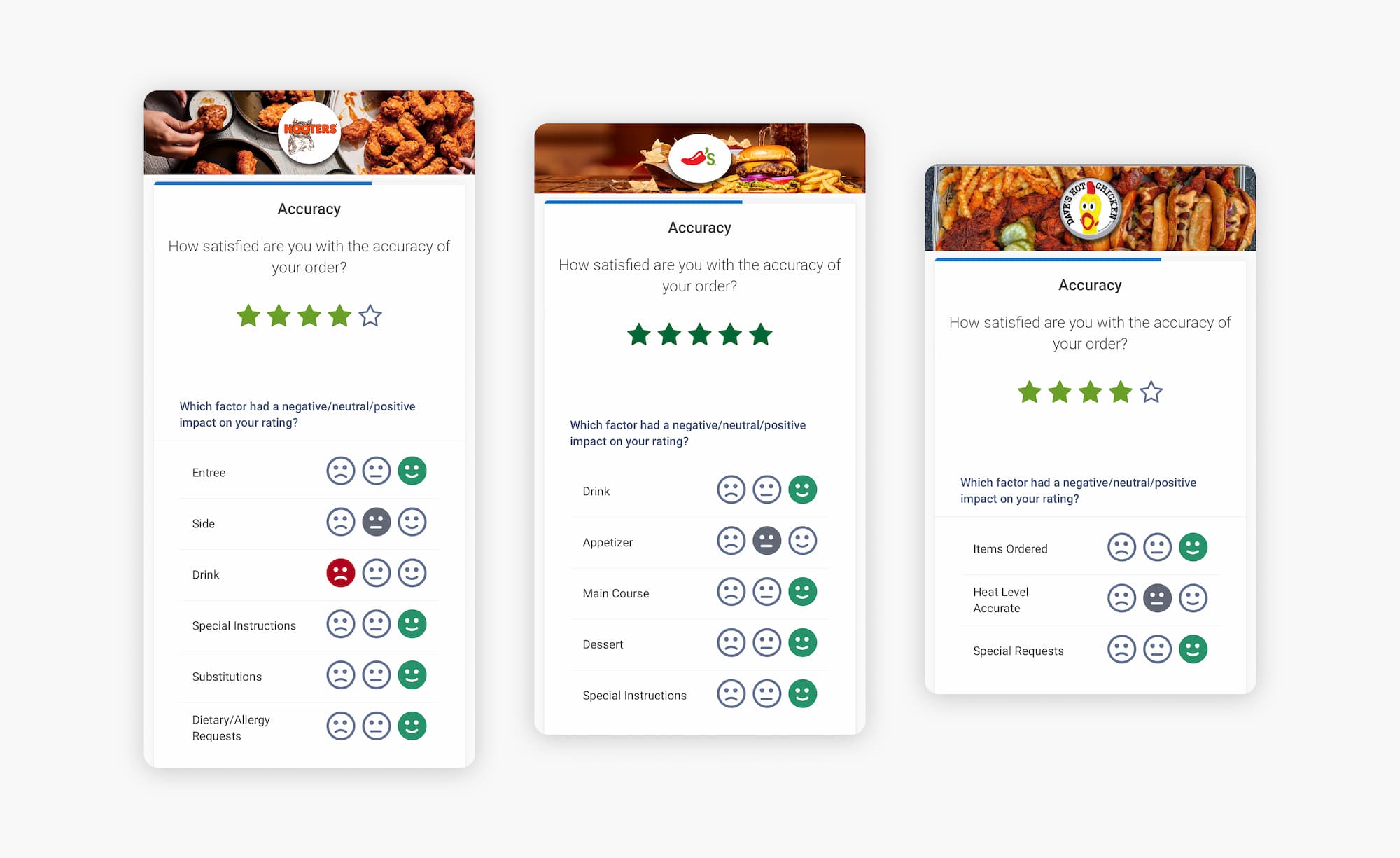
You want to keep these factors consistent between different guest journeys, because very soon you’ll see interesting patterns emerge. This following real-life example from a Tattle partner will show you what we mean.
Comparing the factors quoted for order inaccuracy between order-ahead and delivery guest journeys, you’ll see that the two pyramids look different. In the order-ahead journey, guests select “entrees” and “sides” to be the main reasons for dissatisfaction with their online order. In the delivery journey, the same issues still exist (aka “entrees” and “sides”), with the addition of “requested items”.
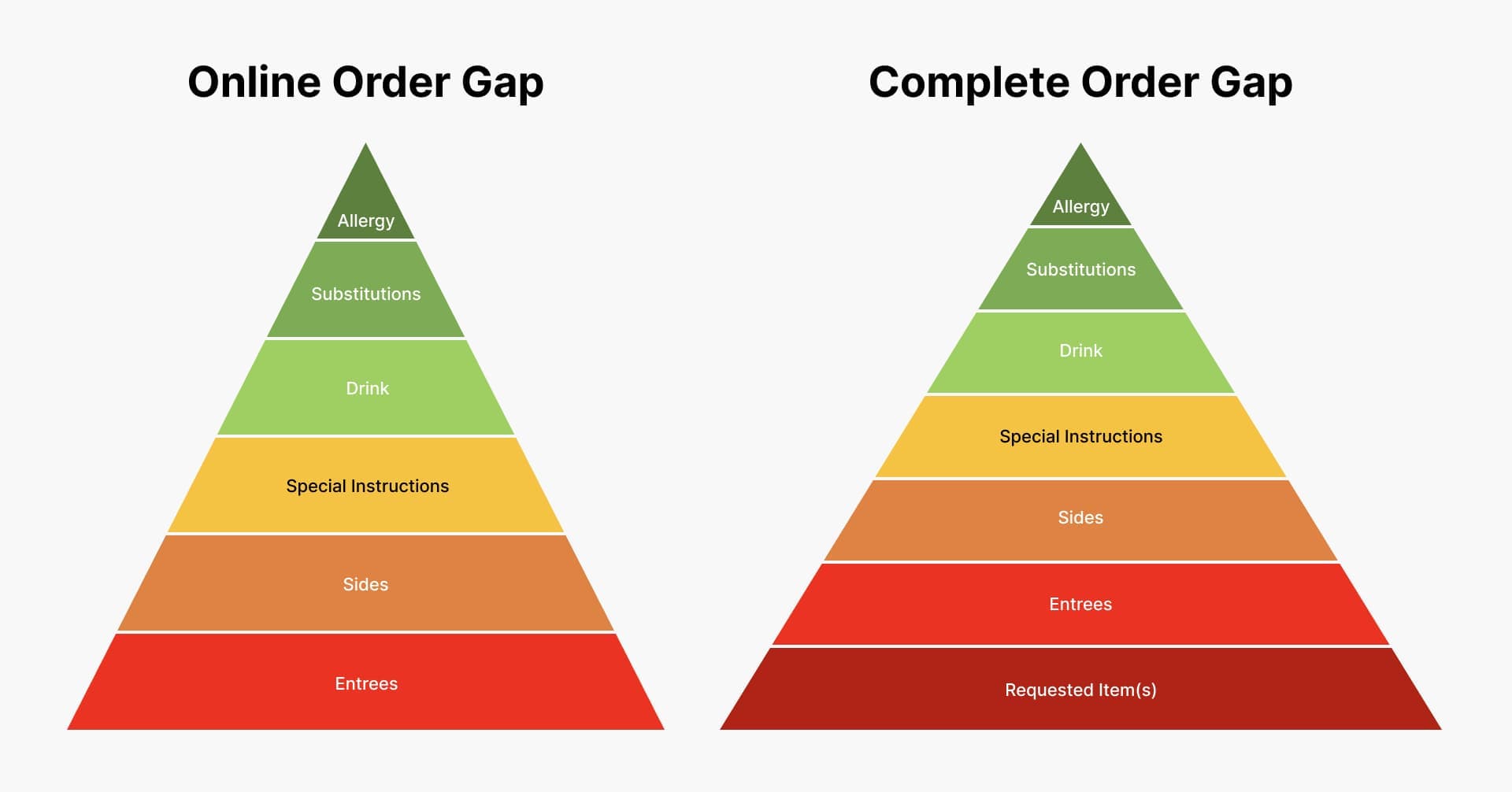
This is because for order-ahead orders, guests don’t get to see what’s going into the meal packaging, but they can confirm the correct number of items upon pickup.
Yet for delivery orders, not only do guests not see what’s going into the meal packaging, but also they don’t know if the correct number of items is being grabbed by the driver before the delivery is complete.
Off-premise guests can’t be their own accuracy advocates, and therefore rely more on restaurants to get things right the first time.
To summarize, you’ve identified the operational gaps in two guest journeys, and the main reasons behind them:
For order-ahead:
For delivery:
Now, let’s tackle each.
First, make sure the correct order goes into meal packaging.
At your aggregator or expeditor station, make sure you have a double-check step to verify the correct order is being packaged. While this measure isn’t perfect and human errors still can occur, it’s still your first line of defense.
Another common opportunity for better order accuracy lies in the ordering process — especially when it comes to special instructions and substitutions.
When you have text boxes for guests to enter special instructions, sometimes the language can be up for interpretation. In certain regions, a “light coffee” could mean the color of the coffee, which means more milk is needed. Whereas in other parts, a “light coffee” means being light on milk. Subjective interpretations like this lead to more confusion and order inaccuracies as a result.
To tackle this, you can set your team members up for success by eliminating such ambiguity with dropdown selections for special instructions, or removing it altogether.
Second, make sure the correct number of items are handed to the driver.
This is where meal packaging comes into play. A low-hanging fruit is tying items together that need to be delivered together, so that no sides or entrees go missing. Most often it’s the attachment items that get left out in a takeout or delivery order, so tying items together makes it easier to hand them over to the driver, and for the driver to hand them off to the guest.
If you follow the above steps, you’ll definitely have a more scientific and systematic approach to investigating any operational issues and uncovering the root causes.
If you decide to implement a major operational change, be sure to test it at select stores and monitor guest sentiment data before vs. after, before rolling it out brand-wide. This will help you make informed, measured decisions with greater confidence and higher likelihood of winning.
Check out our other content on how you can achieve operational success in all aspects of your restaurant operations. And as always, reach out to us on the website to learn more about Tattle and what we do!
About the Author
Intelligence & Analytics Expert
Alex formerly led Customer Excellence programs at Blaze Pizza and Dunkin'. Now, he oversees LTO testing, operational analysis, and ROI optimization for Tattle partners.