Insights & Updates
Latest from Tattle
Discover trends, tips, and insights to elevate your restaurant operations.
Discover trends, tips, and insights to elevate your restaurant operations.
 Alex Beltrani
The restaurant industry faces a defining moment. With the National Restaurant Association projecting $1.5 trillion in sales and competition intensifying across every segment, executives need clarity on what drives sustainable growth.
After analyzing over 18.2 billion data points from 250+ restaurant brands across 15,000+ locations, I can tell you definitively: it's guest experience. Not the superficial, score-chasing kind, but the kind that serves as operational intelligence that predicts revenue and compounds competitive advantage.
American Express research found that 70% of consumers will spend more money with companies that deliver great service.
That’s just one reason why guest experience is the precursor to a restaurant’s bottom line. Here's what our proprietary research reveals: analyzing transaction data from tens of thousands of restaurants alongside Customer Experience Rating scores, we've discovered that just a four-point increase in guest satisfaction creates a 14× difference in revenue growth between locations. Same brand. Same menu. Same pricing. Same marketing.
The only variable? Guest experience execution.
At Wings and Rings, this correlation was undeniable. After boosting guest satisfaction by 34% using Tattle, their analysis showed stores with the highest CER scores consistently outpaced their peers in same-store sales growth—making guest experience a leading indicator of revenue performance.
Yet here's the disconnect: 64% of full-service customers and 47% of limited-service customers say experience matters more than price, according to the National Restaurant Association. But most brands still compete primarily on discounts. That's leaving money on the table.
Despite 93% of operators collecting feedback, the same percentage admit they can't translate it into operational improvements. Three critical mistakes plague the industry:
Mystery shoppers capture 0.1% of reality. You're spending hundreds per location for eight monthly visits while ignoring the thousands of guests who could provide real-time feedback.
Generic surveys produce noise, not signal. Asking "How satisfied were you?" generates scores operators can't act on. Was the food cold? Was the order wrong? Without causal data connecting satisfaction to specific operational factors, you're flying blind.
Review sites reveal what you already lost. Research shows 32% of customers abandon brands they love after one bad experience. By the time negative reviews appear, dozens of guests have already churned.
The breakthrough comes when you treat guest experience not as a satisfaction metric, but as operational intelligence that prevents problems before they cascade into revenue loss.
Over a decade of working with industry leaders like Chili's, MOD Pizza, and Hooters has taught us three non-negotiable principles:
Stop asking broad questions. Our causation-based surveys achieve a 94.7% completion rate without compromising on data granularity. This reveals that a "food quality" problem is actually a temperature issue on lunch shifts, not flavor or portion size. When you identify the precise factor, the fix becomes obvious.
Brands using this approach identify improvement opportunities 20× faster than those using traditional surveys.
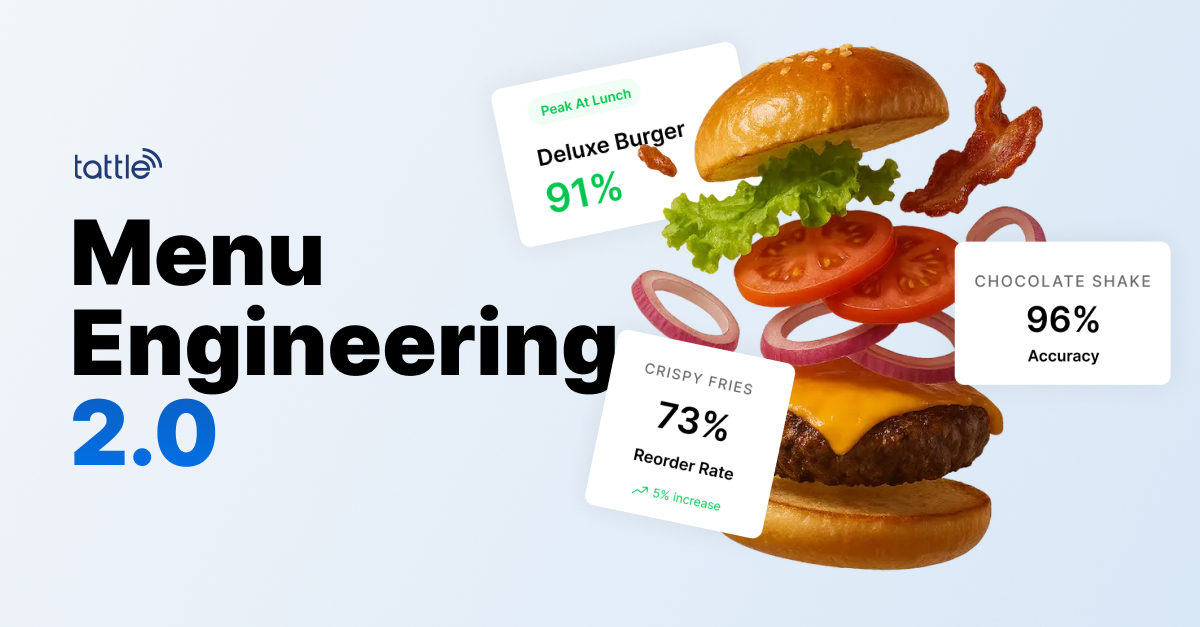
Most brands obsess over sales numbers but can't answer basic operational questions: Which menu items have the highest likelihood for guest recommendation or return? How do you measure the actual success of an LTO campaign beyond sales volume? Is your labor deployment during peak hours creating service bottlenecks? How does guest experience vary by daypart—and which shifts are dragging down your overall performance?
These are the symptoms that reveal operational health before they show up in your P&L. Sales numbers are lagging indicators. By the time revenue dips, the damage is done. You need leading indicators that tell you what's breaking while you still have time to fix it.
Operators don't need dashboards. They need to know which problems to fix first and exactly how to fix them.
When Cotton Patch Cafe deployed our AI Coach across 48 locations, guest satisfaction jumped 27% in 90 days with 100% GM engagement. The AI analyzes real-time feedback, diagnoses root causes, and generates step-by-step action plans customized to each brand's operations. That's not incremental improvement—that's transformation.
Week 1: Audit your feedback systems. What percentage of guests are you actually hearing from? If you're relying on reviews and quarterly surveys, you have a 90% blind spot.
Week 2: Map integration opportunities with your POS, ordering platforms, and loyalty programs. Each represents an automated feedback collection point.
Week 3: Define operational taxonomy. Break categories like "food quality" into temperature, texture, flavor, portion size, and freshness—factors operators can actually fix.
Your most sophisticated competitors are already treating guest experience as business intelligence. They're using causation-based feedback to identify problems before revenue takes a hit. They're deploying AI to translate massive data volumes into precise operational actions.
In an industry where margins are measured in basis points and every percentage point of retention impacts millions in revenue, the question isn't whether guest experience matters. It's whether you have the systems, analytical capabilities, and operational discipline to turn it into your competitive moat.
The restaurants that master this will thrive in 2026. The ones that don't will wonder why their guests stopped coming back.
Alex Beltrani is CEO and Founder of Tattle, the industry's leading AI-enhanced Customer Experience Improvement platform. With over a decade analyzing guest feedback data and helping brands like Chili's, MOD Pizza, Hooters, and Mellow Mushroom systematically improve satisfaction and revenue, Alex is recognized as one of the restaurant industry's foremost experts on turning customer experience into competitive advantage.